Home /The Why
Movement decline often starts before people notice it.
Balance, mobility, gait, and movement quality can change gradually. Too often, they are not measured until pain, instability, injury, or loss of confidence has already begun.
Kinis.ai is changing that by making Movement Health™ measurable, accessible, and actionable — from clinic to home.
The body gives movement signals long before decline becomes obvious.
People already track heart rate, sleep, blood pressure, glucose, body composition, and cardiovascular fitness. But most people still do not regularly track how well they move.
Movement is one of the most important signals of health. It deserves to be measured earlier.
PROFILE
Movement Health™ is a foundation for everyday life.
Movement is not just exercise. It is how people walk, work, train, recover, age, and stay independent. When movement quality declines, it can affect confidence, activity level, performance, and long-term quality of life.
Independence
Better movement supports daily activities, confidence, and long-term autonomy.
Prevention
Early movement insights can help people take action before decline becomes more serious.
Performance
Balance and mobility affect how people train, compete, and recover.
Longevity
Movement quality is central to staying active and maintaining healthspan.
If we care about healthspan, we need to care about how people move.
The movement health gap is already expensive.
Movement decline, poor balance, and fall-related injuries affect millions of people and create major health and economic costs.
More than 14 million older adults report falling every year.
Source: CDCFalls remain one of the biggest drivers of injury and loss of independence among older adults.
Source: CDCA 2024 analysis estimated U.S. healthcare spending for non-fatal falls among older adults at approximately $80B in 2020.
Source: Injury Epidemiology (2024)Bone Health & Osteoporosis Foundation.
Source: BHOFBone Health & Osteoporosis Foundation.
Source: BHOFBalance is the wedge into Movement Health™.
Balance is one of the most practical and accessible ways to begin measuring functional movement. It gives clinicians, trainers, and individuals a clearer view of stability, control, and movement confidence.
Balance is not just a senior issue. It is a Movement Health™ signal.
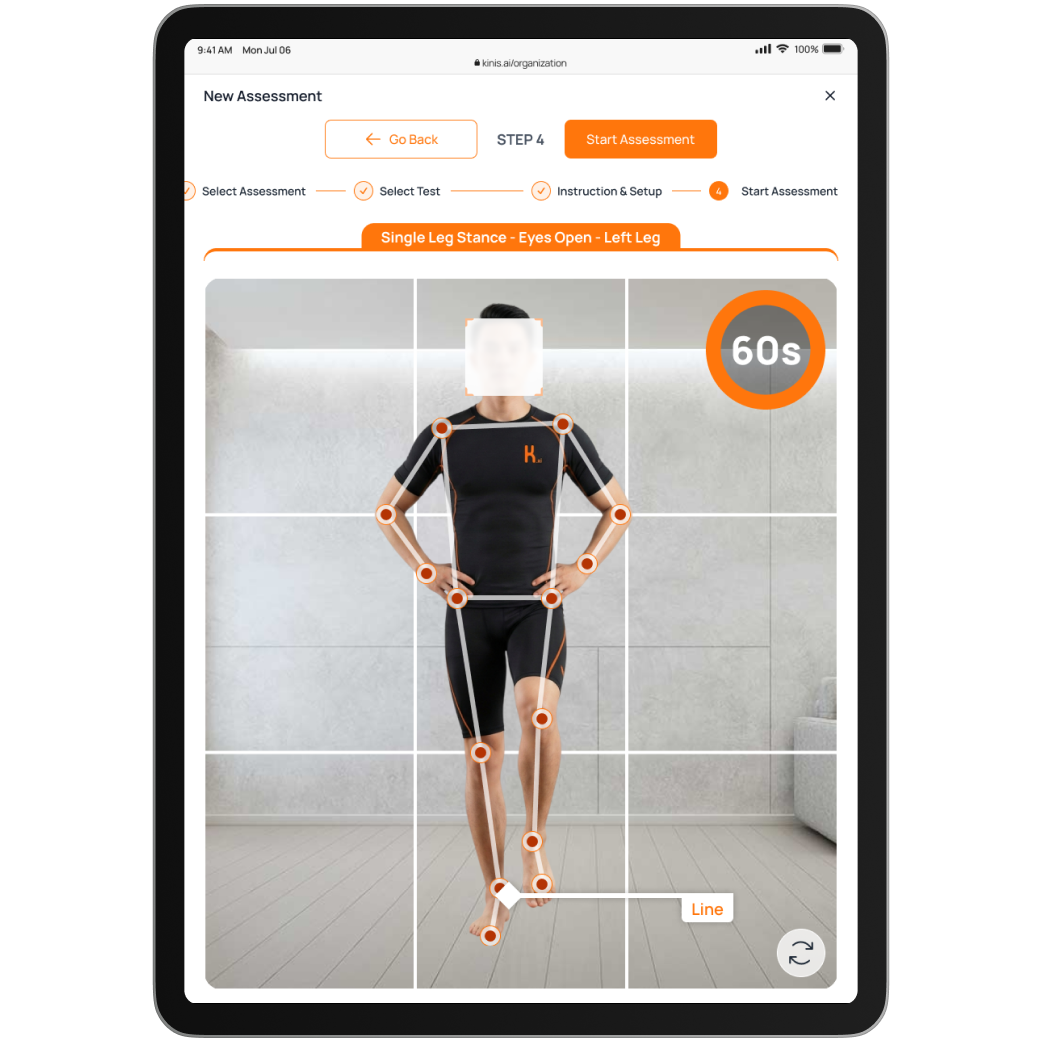
Healthcare is still too reactive.
Too often, movement is evaluated after something has already happened. Pain starts. Confidence drops. A fall happens. An injury occurs. A referral is made. Treatment begins. Kinis.ai helps shift the model upstream.
Reactive model
After the fact- 01Pain happens
- 02Instability appears
- 03Injury or fall occurs
- 04Referral happens
- 05Treatment starts
Kinis.ai model
Upstream- 01Assess earlier
- 02Improve proactively
- 03Retest regularly
- 04Track progress
- 05Stay ahead of decline
Why Now
Several major shifts are converging.
AI computer vision is accessible.
Movement assessment no longer requires expensive labs or specialized equipment.
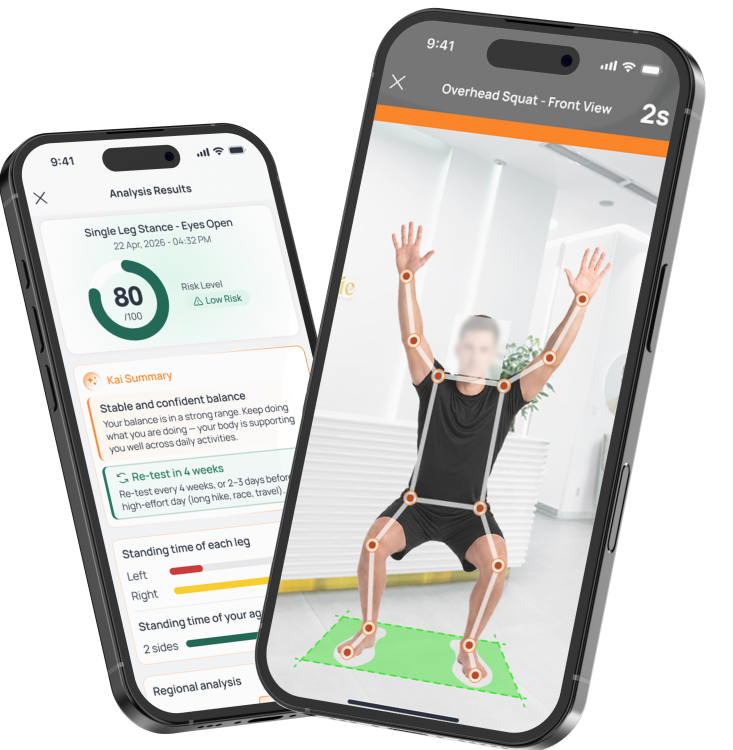
AI computer vision is accessible.
Movement assessment no longer requires expensive labs or specialized equipment.
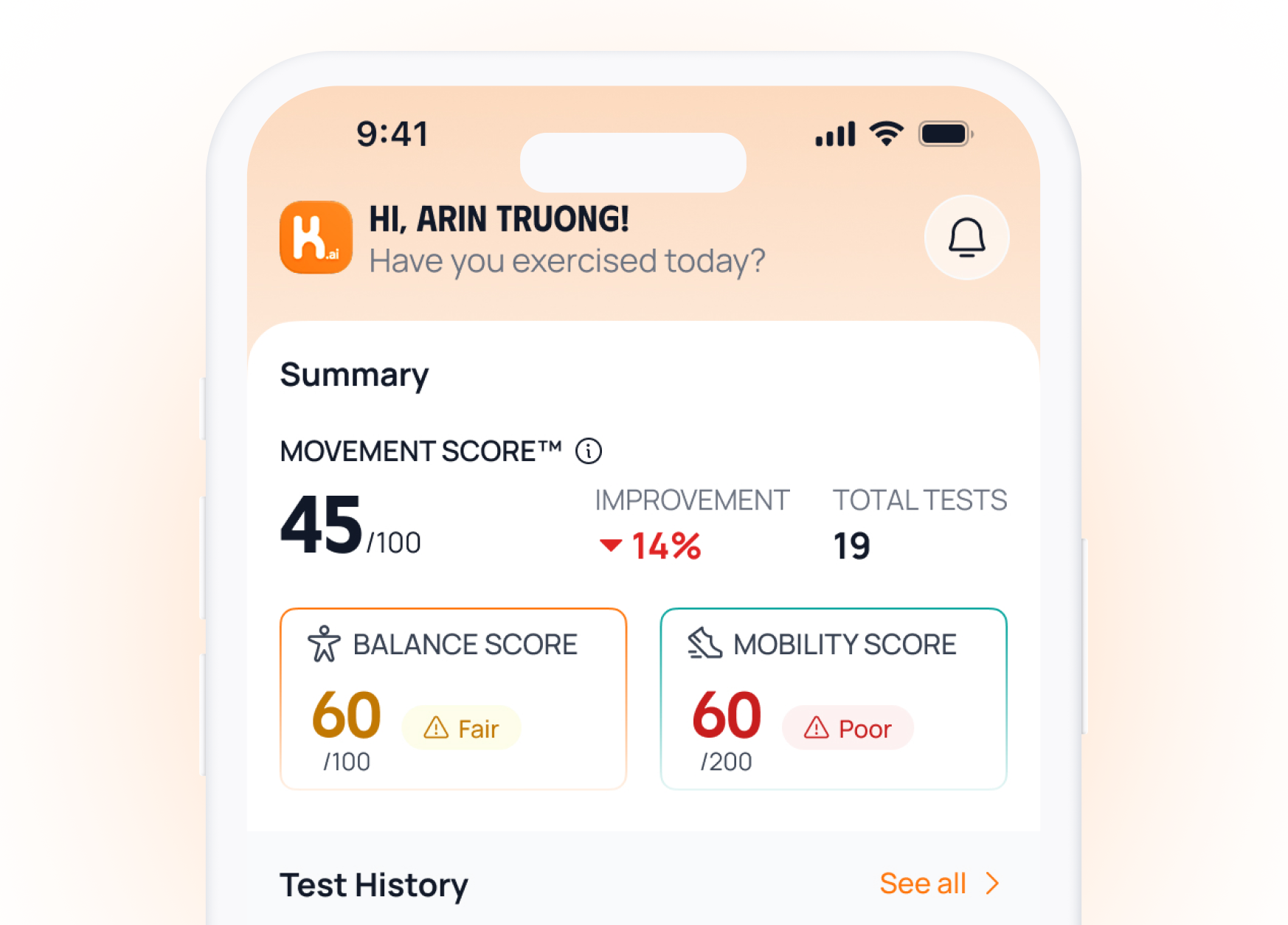
Consumers track health data already.
People are used to scores, trends, and apps that explain how they are doing.
Preventive healthcare is growing
Clinics, employers, and health plans are looking for measurable, scalable prevention.
Aging population is expanding
The 50+ population continues to grow in the U.S. and globally.
Healthspan is a priority
Longevity, performance, and active aging are mainstream concerns.
It is time to make Movement Health™ measurable.
Move better. Stay active. Live stronger.